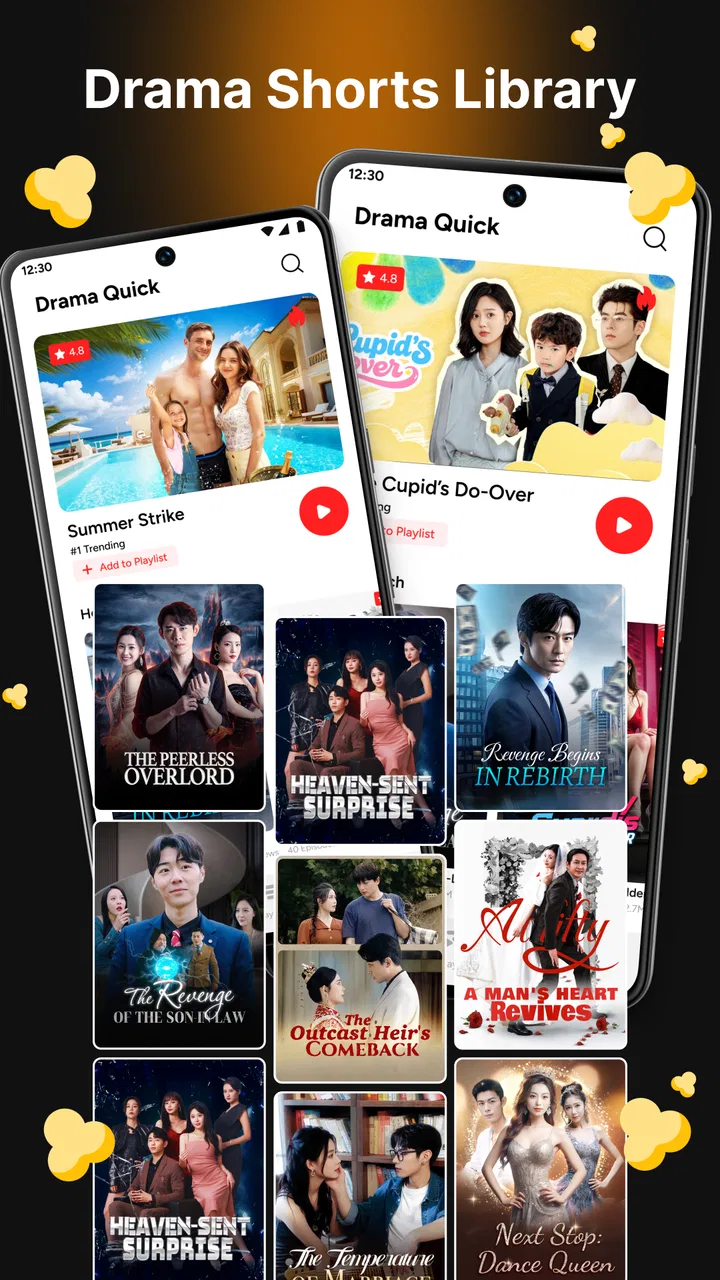
DramaTV: Reel & Drama Shorts
- 3.7
- Rating
- 5.00M
- Installs
- Free
- Price

 Analysis by App-foxy
I tried DramaTV: Reel & Drama Shorts as a quick entertainment app for short-form drama, and its appeal is easy to understand: it is built for the moments when I want a small story rather than a full television episode. The app belongs to the entertainment category, is free to use, and focuses on drama shorts presented in a reel-style viewing flow. That combination makes it particularly suitable for a shared household where people often have only a few spare minutes, although it also creates some boundaries that are worth considering before everyone starts using the same device.
The basic promise is simple without being exactly the same as ordinary social video. Instead of treating every clip as an isolated joke, reaction, or trend, DramaTV centers its experience on short dramatic storytelling. I found that distinction important. A reel can be easy to start and easy to abandon, but a continuing story gives those short sessions a little more purpose. I could watch while waiting for dinner, during a short break, or when I did not want to commit to a long movie.
APANDA TRAVEL CO.,LTD is the developer behind the app. It launched on January 9, 2026, and the current release is version 1.0.0. The app has already passed one million installs and holds an average rating of 4.2 from around four thousand ratings, which suggests that the short-drama format has found a substantial audience. I would still treat the early version as a starting point rather than a finished replacement for a mature streaming service.
You May Also Like

 Google Keep - Notes and lists
Google Keep’s Quiet Growth Shows the Appeal of Simpler Notes
As mobile work gets busier, Google Keep keeps winning a simple contest: capture a thought quickly, find it later, and get on with the day.

 Blood Strike: 2.5 Anniversary
Blood Strike’s Loadouts Turn Every Drop Into a Tactical Gamble
A close look at Blood Strike’s custom loadouts: how fast access to signature weapons reshapes its battle royale rhythm, rewards preparation, and narrows the gap between fights.

 Pandora - Music & Podcasts
Pandora’s Music Is Easy to Start, but Harder to Recover
Pandora’s strength is its low-effort path from a seed to a station. Its weak spot is how much confidence it asks you to place in connection, setup, and quiet recovery.

 8 Ball Pool
 Is Built on Rivalries, Rematches, and Routine
A close look at the rivalries, rematches, shared routines, and unanswered safety questions that turn a quick pool match into a persistent mobile community.

 Samsung Music
’s Quiet Strength Is Playing What You Already Own
Its reach comes less from spectacle than from dependable access to a personal library. That simplicity is both the app’s strongest retention engine and its ceiling.

 AccuWeather: Weather Radar
AccuWeather Review: A Quick, Clear Forecast for Everyday Decisions
For everyday plans, the best forecast is the one you can understand quickly. AccuWeather makes rain timing, radar, and local conditions easy to act on, with a few trade-offs.
More From Our News Desk



How DramaTV Fits Into Shared Household Viewing
I find shared viewing works best when the household treats DramaTV as a quick, individual turn rather than assuming everyone will enjoy the same stream. A useful next step is to agree on whether a viewer should leave the current scene open for the next person or close the app and let them start fresh; that small choice can prevent accidental interruptions and keep the device handoff easy.
A practical app for small windows of free time
The most convincing use case is a household with one phone or tablet that several people pick up at different times. Imagine a parent preparing breakfast while a teenager watches a few dramatic clips before school, then another family member opening the same device later for a short break. The app’s reel-oriented format suits that pattern because a viewer can begin quickly without arranging a full evening around a program.
In my experience, short drama works best when I decide in advance how much time I have. If I have only a few minutes, I watch one or two pieces and stop. If I have longer, I let the next recommendation carry me forward. That sounds obvious, but it changes how the app feels: it is less like selecting a carefully planned film and more like browsing a stream of compact story moments.
That convenience is also the first trade-off. A shared device can make the viewing history and recommendations feel communal rather than personal. If one person prefers emotional relationship stories and another wants something lighter, the next suggestions may not match either viewer perfectly. I would not treat the app as a private, personalized television profile unless the device and viewing habits are already separated in the household.
Why the reel format changes the viewing habit
The smooth reel presentation encourages continuous swiping, so the app is strongest when I want discovery rather than a specific title. I can quickly judge whether a scene has caught my attention and move on if it has not. This removes some of the effort associated with opening a conventional streaming service, comparing seasons, and deciding whether I have enough time for a full episode.
However, the same design can make it harder to be deliberate. When I watch a normal program, I know what I selected and why. In a reel flow, the next piece can become the decision-maker. My practical advice is to use the app with a small stopping rule: finish a scene, watch a set number of clips, or stop when the available break ends. That keeps a five-minute visit from quietly turning into a much longer session.
For a household, this simple habit matters because shared devices often have no clear handoff. One person may leave the app open, and the next person may continue from the visible screen without knowing what was being watched. A quick swipe away from the previous story—or closing the app before handing over the device—helps avoid awkward surprises without requiring any special household feature.
What I would do before handing over the phone
I would treat the app like any other entertainment feed on a shared screen. Before another person uses it, I would check which scene is currently visible, lower the volume if the room is quiet, and make sure the device is not about to autoplay something unsuitable for the person nearby. These are small steps, but they are more useful than assuming that a general content label automatically fits every family situation.
I would also avoid letting a younger child browse alone simply because the app is marked Everyone. That age classification is reassuring as a broad store-level guide, but drama can still include emotional conflict, arguments, romantic themes, or situations that a particular child may not enjoy. The right decision depends on the child’s maturity and the household’s own standards, not only on the label.
Setting boundaries without pretending the app is a family manager
DramaTV is an entertainment viewer, not something I would choose as the center of a household media-management system. I would not expect it to solve questions such as who may watch, how long they may watch, or which themes are acceptable. Those decisions still belong to the people sharing the device.
A simple arrangement works better for me: adults decide whether the app is appropriate for the household, older children use it with an agreed viewing window, and younger users watch with someone nearby. If the phone belongs to one person, that owner should also decide whether browsing history and recommendations are private or open to the next user. This is not a criticism of the short-drama concept; it is a reminder that convenience and supervision are different things.
For a shared tablet, I would create a physical routine rather than rely on assumptions. One person uses headphones when others are working, the device returns to a common charging place, and viewers close the app when finished. These rules are especially useful because short clips make it tempting to pick up the device repeatedly throughout the day.
Another useful boundary is distinguishing casual viewing from intentional viewing. If someone wants to follow a story, they should note where they stopped or tell the next user that the current clip matters. If the device is treated as a communal screen, people may accidentally interrupt each other’s progress. DramaTV’s short format makes this less painful than losing an hour-long episode, but it does not remove the problem entirely.
Coordinating different tastes in one home
Shared use becomes easier when the household agrees on when the app is for individual browsing and when it is for group viewing. I would use it individually during short breaks, but I would be more cautious about presenting it as a family-watch choice without previewing the material. Short drama can move quickly between emotional situations, and a clip that seems harmless to one viewer may feel uncomfortable to another.
If two people want to use the same device, taking turns by time is more reliable than trying to negotiate every clip. One person can browse for a short session, then hand over the phone. This avoids the common problem where one viewer keeps saying “just one more” because each clip is brief. The format makes that promise easy to repeat and surprisingly difficult to enforce.
I also recommend keeping expectations modest when several people are watching together. DramaTV is designed around short, reel-like consumption, so it may not provide the same shared rhythm as a conventional series with a clear beginning and ending for the evening. It is better for exchanging reactions to individual scenes or discovering something to continue later than for replacing a planned movie night.
There is a useful exception: the app can work well as a conversation starter. A household member can show a dramatic clip, explain why it was interesting, and then pass the device along. That kind of short, social use takes advantage of the format without requiring everyone to follow the same stream for a long period.
Age context and trust still matter
The Everyone content rating makes DramaTV approachable for a broad audience, and I would feel more comfortable introducing it to a mixed-age home than an app clearly aimed at mature viewers. Still, I would not interpret that rating as a guarantee that every clip will match every family’s preferences. Parents and guardians know their children’s sensitivities better than a general classification can.
Trust is also relevant for older children and teenagers. If they use the app on a personal device, I would explain that a reel feed can keep presenting new material and that they should leave anything that feels inappropriate or upsetting. If they use a shared device, I would make the privacy expectation clear: is the device available for anyone to pick up, or does each person have a private viewing turn?
That conversation is more useful than making vague promises about supervision. The app’s strength is its low friction, and low friction means a viewer can move from one clip to another quickly. A household should decide whether that is acceptable before installing it for a child, rather than waiting until someone encounters a scene that causes disagreement.
I would also keep the app’s free status in perspective. There is no purchase price to create a barrier to trying it, which is convenient for a household testing the format. Free entertainment can still create costs in attention, battery use, mobile data, or family time. I would use a home connection when possible and avoid assuming that “free” means there are no practical considerations.
What the app does better than familiar alternatives
Compared with a full streaming service, DramaTV is easier to open when I have no intention of watching a complete episode. I do not need to reserve a long block of time or remember exactly where I left off in a season. Its short-drama focus also gives it a clearer identity than a general video platform filled with unrelated categories.
Compared with ordinary social-video apps, the storytelling focus is its main advantage. I am more likely to encounter a scene with a dramatic setup or emotional continuation than a random collection of memes, tutorials, and news fragments. That makes the experience feel more coherent when I want fiction rather than general scrolling.
The weakness is that it may not satisfy someone looking for a deep catalog, carefully organized series, or a dependable living-room viewing experience. A conventional streaming service is better when I want to search for a particular show, plan a family movie, or maintain a long narrative over several evenings. A standard social platform is better when variety and creator interaction matter more than drama.
In other words, I would not install this as a universal replacement. I would add it for a specific habit: short fictional entertainment with a reel-style flow. That narrower purpose is exactly why it can feel refreshing, but it is also why some viewers may lose interest quickly.
Small techniques that make short-drama browsing better
My first practical tip is to separate discovery from commitment. The first few clips are useful for learning whether the current stream matches your mood, but I would not assume that every recommendation deserves a full session. If the tone feels repetitive, stop and return later rather than scrolling simply because the next clip is immediately available.
My second tip is to use the app as a transition activity, not as background noise during every task. Drama depends on attention, even when each piece is short. Watching while cooking, studying, or caring for a child can mean missing important context and then blaming the story for feeling confusing. A focused ten-minute session is more satisfying than half-watching while distracted.
My third tip is especially useful on a shared device: announce when you are leaving a story unfinished. A quick note such as “I was watching this one” prevents another user from changing the visible recommendation and makes the handoff friendlier. If the household does not care about continuity, then simply close the app and treat every session as a fresh browse.
My fourth tip is to decide whether sound or subtitles fit the room before starting. Short dramatic clips often depend on dialogue and emotional timing, so muted viewing may reduce the experience more than it would with a visual comedy clip. Headphones can solve the noise problem for one person, but they make the session less social and may reduce awareness of what is happening around them.
Who should use it, and who should skip it?
I would recommend DramaTV to someone who enjoys compact fictional scenes, likes discovering stories through vertical or reel-style browsing, and often has irregular free time. It is also a reasonable choice for a household that wants an easy entertainment option without paying to try it first. The broad Everyone rating makes it easier to consider for a mixed-age environment, provided an adult still applies personal judgment.
I would be less likely to recommend it to someone who dislikes algorithmic browsing, wants complete long-form episodes, or needs strong separation between several viewers on one device. It is also not my first choice for a carefully planned family viewing night, where a conventional service with known titles and predictable runtime offers more control.
People who are easily pulled into endless scrolling should approach the reel design carefully. The app’s convenience is real, but the same convenience can make stopping less obvious. I would use a timer or a clear endpoint if short sessions are important, especially when the phone is shared with someone waiting for it.
My household verdict
DramaTV: Reel & Drama Shorts works best as a lightweight, free source of short fictional entertainment rather than as a complete television platform. I like the way it turns spare minutes into a chance to follow dramatic moments, and the reel flow makes starting far easier than committing to a full episode. Its one-million-plus install base and 4.2 average show that the format has broad appeal, while the current 1.0.0 release also reminds me to keep expectations realistic about a young product.
For a shared household, I would install it with clear habits: decide who uses the device, agree on reasonable viewing times, consider the age and sensitivity of each viewer, and close the app when handing the device over. The app itself should not be treated as a substitute for family boundaries or private profiles.
My final recommendation is positive but specific. If you want quick drama shorts and enjoy discovering stories through smooth reel browsing, the free download is easy to justify. If you want a polished long-form catalog, precise household separation, or a dependable group-watch experience, another kind of entertainment service will suit you better. For the right viewer—and with sensible shared-device coordination—it is a convenient way to turn a few spare minutes into a small story.
FAQs for DramaTV: Reel & Drama Shorts
01What is DramaTV: Reel & Drama Shorts?
DramaTV: Reel & Drama Shorts is an entertainment app that provides users with a wide variety of short drama episodes and reels. It's designed for those who love quick, engaging stories that can be easily streamed on their mobile devices. The app offers curated content that spans multiple genres, ensuring there's something for everyone.
02Is DramaTV free to use, or does it require a subscription?
DramaTV offers both free and subscription-based access. While users can enjoy a selection of content for free, subscribing allows access to premium content, ad-free viewing, and additional features. The subscription plans vary, and users can choose based on their viewing needs and budget.
03Does DramaTV support offline viewing?
Yes, DramaTV supports offline viewing for its premium subscribers. This feature allows users to download their favorite episodes and watch them without an internet connection, making it convenient for viewing on the go. Free users, however, will need an active internet connection to stream content.
04What devices is DramaTV compatible with?
DramaTV is compatible with both Android and iOS devices. Users can download the app from the Google Play Store or the Apple App Store. The app is optimized for smartphones and tablets, ensuring a seamless viewing experience across different screen sizes.
05How often is new content added to DramaTV?
DramaTV regularly updates its library with new content to keep users engaged. New episodes and reels are typically added weekly, covering a variety of themes and genres. This ensures that users always have fresh content to explore and enjoy.
Pros
- Extensive library of drama content.
- High-quality video streaming available.
- User-friendly interface and navigation.
- Regular updates with new content.
- Supports offline viewing for convenience.
Cons
- Ads can be intrusive during videos.
- Requires a stable internet connection.
- Limited subtitle options available.
- Some features locked behind paywall.
- Occasional app crashes reported.

DramaTV: Reel & Drama Shorts
Gallery